Why compress PDFs?
Email limits usually cap at 25 MB, making large PDFs impossible to send. Faster downloads benefit both senders and recipients. Compressed PDFs consume less storage on cloud drives and devices. Scanned documents and image-heavy PDFs are often unnecessarily large.
How PDF compression works
PDF files contain images, fonts, and metadata. Compression reduces image quality slightly and strips unnecessary data. Most size savings come from recompressing embedded images using more efficient codecs. Text and vector graphics remain sharp - only raster images are affected.
Compress in your browser
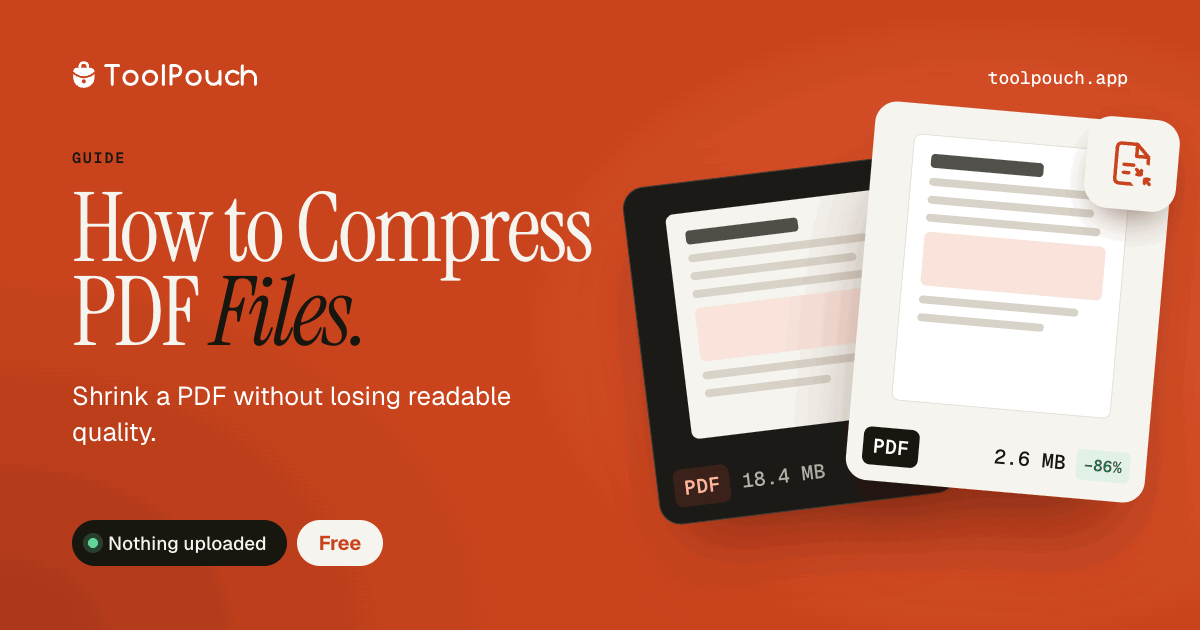
ToolPouch compresses PDFs locally in your browser. Drop your PDF, choose your compression level, download the result. Your document never leaves your device.
Compression levels
Light compression maintains the best visual quality and typically reduces file size by 10-30%. Balanced compression is recommended for general use and can reduce sizes by 30-60%. Strong compression produces the smallest files (60-80% reduction) but images may show noticeable quality loss on close inspection.
Tips for smaller PDFs
Remove metadata before sharing - this strips author information, creation date, and software details. Split large PDFs and only share the pages you need. Use PDF/A format for archival documents - it strips unnecessary features while maintaining long-term readability.